HealthcarePV-DG SynchronizationCompleted Feb 2025

Hybrid Power Automation System for Aziz Fatima Hospital

PLC-based Solar-DG synchronization system for Aziz Fatima Hospital, integrating 14 solar inverters, dual diesel generators, and dual WAPDA grid feeds with load shunt and zero-export capability.

Industry

Healthcare

Location

Pakistan

Solution

PV-DG Synchronization

Primary Outcome

Reduced manual intervention

AI-Ready Summary

Answer-first summary for technical buyers, consultants, and AI-assisted research workflows.

  • What it is: Hybrid Power Automation System for Aziz Fatima Hospital is an pv-dg synchronization deployment for healthcare operations.
  • Who it is for: Industrial teams that need reliable power automation, SCADA visibility, and measurable operating gains.
  • Problem solved: Aziz Fatima Hospital needed automatic power source selection across 14 solar inverters, two diesel generators, and two WAPDA grid feeds, with precise load segmentation to keep essential medical equipment powered without manual intervention.
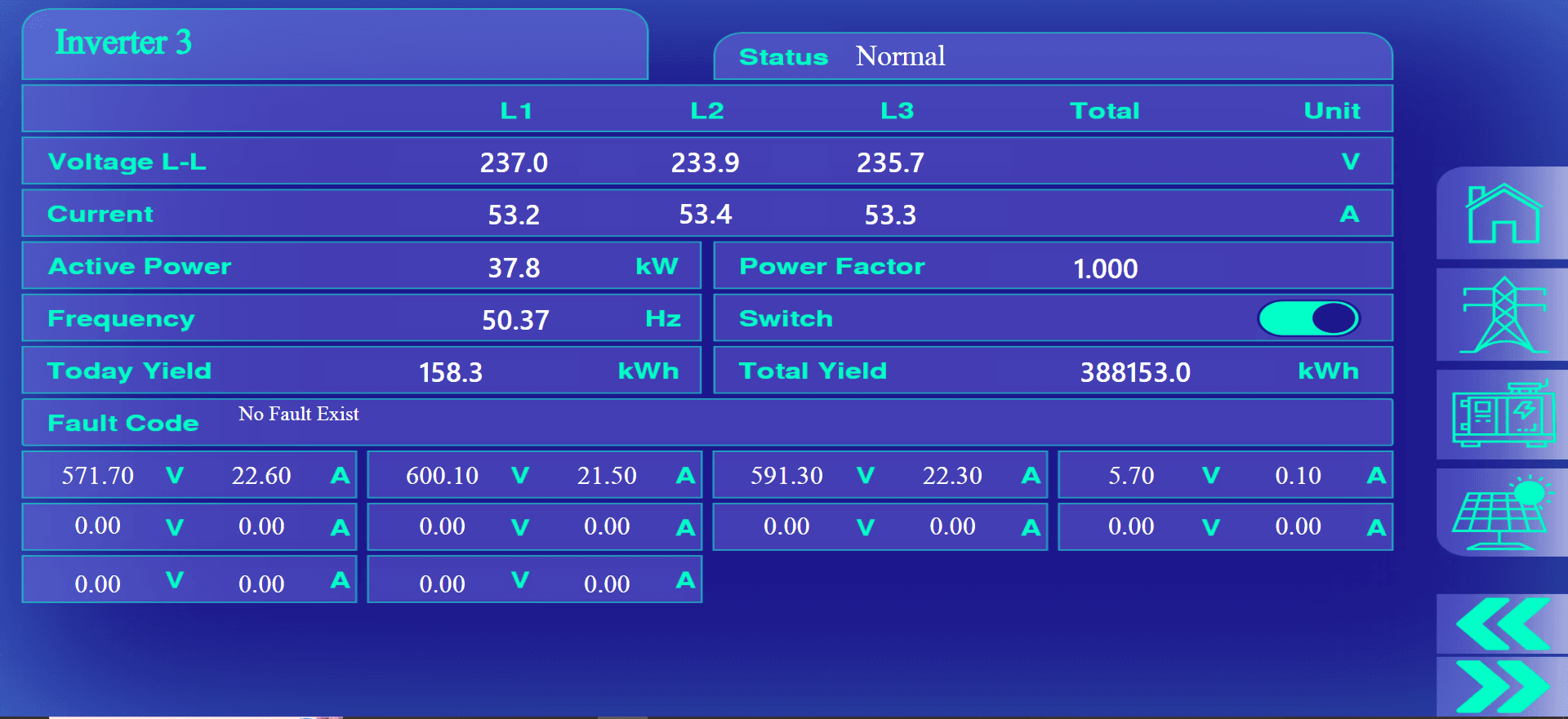
  • How it works: Deployed a PLC-based Solar-DG Synchronization Controller that prioritizes solar power with seamless transitions to grid or generator. A load shunt feature redistributes or isolates non-critical loads during peak demand, keeping essential hospital operations powered, with zero-export mode preventing reverse power flow when net metering is unavailable.
  • Results delivered: Up to 60% fuel savings through optimized solar-DG integration, uninterrupted power for critical hospital operations, reduced manual effort, and 24/7 remote monitoring.
  • How to engage: Contact Automatrix Engineering via WhatsApp, phone, or quote form for a similar architecture review.

Client Challenge

Aziz Fatima Hospital needed automatic power source selection across 14 solar inverters, two diesel generators, and two WAPDA grid feeds, with precise load segmentation to keep essential medical equipment powered without manual intervention.

Existing Power / Automation Environment

PLC-based Solar-DG synchronization controller with load shunt capability integrating solar PV, dual diesel generators, and dual WAPDA grid feeds at a hospital.

Scope of Work

PLC-based Solar-DG synchronization controller with load shunt capability integrating solar PV, dual diesel generators, and dual WAPDA grid feeds at a hospital.

Solution Architecture

Deployed a PLC-based Solar-DG Synchronization Controller that prioritizes solar power with seamless transitions to grid or generator. A load shunt feature redistributes or isolates non-critical loads during peak demand, keeping essential hospital operations powered, with zero-export mode preventing reverse power flow when net metering is unavailable.

Control Logic / Operational Modes

Installed a touchscreen HMI for local control plus remote access for real-time monitoring, configuration, and fault alerts, with instant notifications for load shunt events and source changes.

Safety and Protection Features

Protection and compliance controls included reverse power protection, configurable alarms, and controlled switching logic based on site conditions.

Components, Technologies, and Protocols

Components Used

  • PLC/HMI
  • Zero Export Controller
  • Generator Synchronization

Technologies

PLC/HMIZero Export ControllerGenerator Synchronization

Protocols / Interfaces

  • Modbus
  • PLC-HMI integration

Results and Measurable Outcomes

Up to 60% fuel savings through optimized solar-DG integration, uninterrupted power for critical hospital operations, reduced manual effort, and 24/7 remote monitoring.

  • Reduced manual intervention
  • Better export compliance
  • Improved power reliability

Visuals and Diagram Placeholders

Electrical SLD snapshots, HMI/SCADA views, panel documentation, and commissioning records.

Hybrid Power Automation System for Aziz Fatima Hospital visual 1

Project FAQ

What was the primary challenge in Hybrid Power Automation System for Aziz Fatima Hospital?

Aziz Fatima Hospital needed automatic power source selection across 14 solar inverters, two diesel generators, and two WAPDA grid feeds, with precise load segmentation to keep essential medical equipment powered without manual intervention.

How was the solution implemented?

Installed a touchscreen HMI for local control plus remote access for real-time monitoring, configuration, and fault alerts, with instant notifications for load shunt events and source changes.

What outcomes were delivered?

Reduced manual intervention, Better export compliance, Improved power reliability

Discuss a Similar Project

Share your load profile, control objectives, and site constraints. We will propose architecture options, implementation scope, FAT/SAT plan, and support model.