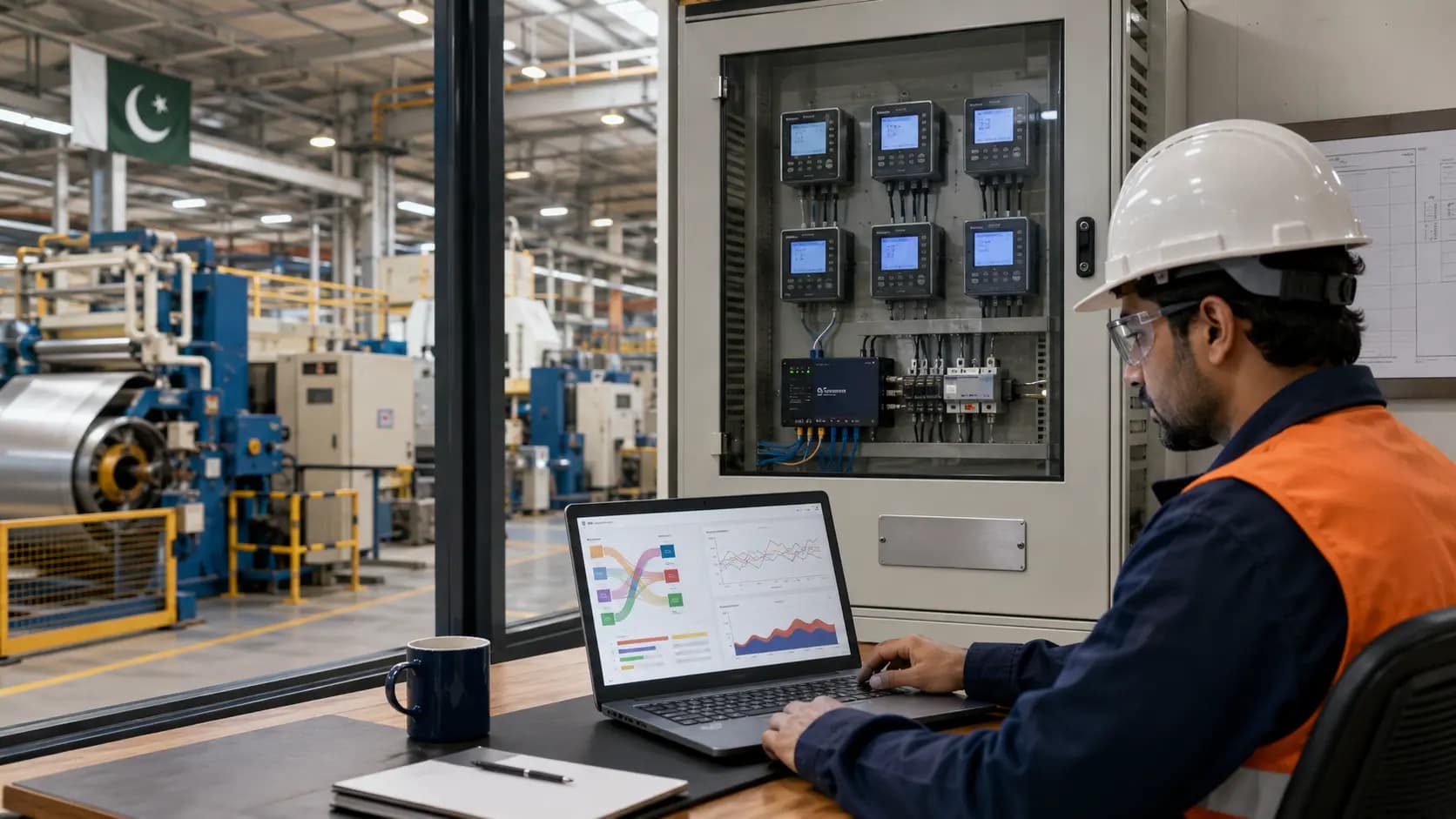
Energy Monitoring & Management Systems (EMS)
Real-time visibility into energy consumption, power quality, and equipment performance. Identify inefficiencies, reduce waste, and optimize operations with data-driven insights.
Overview
Why this service matters
Real-time visibility into energy consumption, power quality, and equipment performance. Identify inefficiencies, reduce waste, and optimize operations with data-driven insights.
Quick Value
- 01Real-time monitoring of voltage, current, power, energy, and power factor
- 02Multi-level metering: main incomer, feeders, sub-feeders, and equipment level
- 03Power quality analysis: harmonics, voltage sags/swells, and transients
What This Service Covers
This page explains what Energy Monitoring & Management Systems (EMS) includes, who it is designed for, how implementation is executed, and what operational outcomes to expect.
Ideal For
- Textile and manufacturing facilities managing uptime, quality, and power variability
- Commercial and industrial operations that need SCADA visibility and controlled alarm response
- Engineering teams planning PV-DG synchronization, protection upgrades, or remote monitoring
What You Get
Real-time monitoring of voltage, current, power, energy, and power factor
Multi-level metering: main incomer, feeders, sub-feeders, and equipment level
Power quality analysis: harmonics, voltage sags/swells, and transients
Energy consumption analytics with cost allocation by department/process
Peak demand monitoring and load forecasting
Customizable dashboards and automated reporting
Overview
Energy costs typically represent 20-40% of industrial operational expenses in Pakistan. An Energy Monitoring System (EMS) provides the data foundation for energy optimization.
Related Case Studies
PV Generator Controller System for AA Cotton Industries
A PV Generator Controller system synchronizing 5 solar inverters, a diesel generator and grid supply to optimize power distribution at a cotton processing facility.
200kW Solar-Generator Synchronization at Ittifaq Rice Mill
A 200 kW solar power system synchronized with two diesel generators to reduce fuel costs and ensure continuous power at a rice processing facility.
HFO Generator Monitoring & Control System for Ghani Value Glass
A real-time HFO (Heavy Fuel Oil) engine monitoring and SCADA control system delivering live trends, alarms, and generator start-stop automation.
Frequently Asked Questions
What is the ROI on an energy monitoring system?
Most clients see 10-20% energy cost reduction within the first year through identification of inefficiencies. Typical payback period is 1-2 years.
Why Choose Automatrix Engineering
Proven Experience
Proven project delivery across Pakistani industrial and commercial facilities.
Fast Deployment
Planned implementation with minimal production disruption and clear milestones.
Ongoing Support
Commissioning support, operator handover, documentation, and responsive technical assistance.
Ready to Get Started?
Discuss your facility requirements and get a practical technical proposal for energy monitoring & management systems (ems).
Response within 24 hours • Consultation available • Site survey by request