InstitutionsPV-DG SynchronizationCompleted Mar 2025

PV Generator Synchronization System for CECOS University Campus

Hybrid solar-diesel-grid synchronization controller deployed at CECOS University, integrating three solar inverters with a diesel generator and the national grid for reliable, cost-efficient campus power supply.

Industry

Institutions

Location

Peshawar, Pakistan

Solution

PV-DG Synchronization

Primary Outcome

Improved operational visibility

AI-Ready Summary

Answer-first summary for technical buyers, consultants, and AI-assisted research workflows.

  • What it is: PV Generator Synchronization System for CECOS University Campus is an pv-dg synchronization deployment for institutions operations.
  • Who it is for: Industrial teams that need reliable power automation, SCADA visibility, and measurable operating gains.
  • Problem solved: The university campus relied on three solar inverters, a diesel generator and the grid operating independently, causing inefficient fuel use, risk of reverse power damaging the generator, and no centralized visibility across the three sources.
  • How it works: Automatrix deployed a PV Generator Controller to synchronize the three solar inverters, diesel generator and grid into one coordinated hybrid system with automated source switching and protection logic.
  • Results delivered: Diesel generator runtime was reduced through maximized solar utilization, with automated switching maintaining stable, uninterrupted power for campus operations and cutting reliance on costly diesel fuel.
  • How to engage: Contact Automatrix Engineering via WhatsApp, phone, or quote form for a similar architecture review.

Client Challenge

The university campus relied on three solar inverters, a diesel generator and the grid operating independently, causing inefficient fuel use, risk of reverse power damaging the generator, and no centralized visibility across the three sources.

Existing Power / Automation Environment

Existing site architecture included mixed power sources and required structured integration for stable operations.

Scope of Work

Control strategy design, panel-level integration, commissioning workflow, and operational handover.

Solution Architecture

Automatrix deployed a PV Generator Controller to synchronize the three solar inverters, diesel generator and grid into one coordinated hybrid system with automated source switching and protection logic.

Control Logic / Operational Modes

Installed zero-export protection to stop solar power being fed back to the utility, added reverse power protection for the generator, and configured the controller to prioritize solar consumption over diesel and grid.

Safety and Protection Features

Protection and compliance controls included reverse power protection, configurable alarms, and controlled switching logic based on site conditions.

Components, Technologies, and Protocols

Components Used

  • PLC/HMI
  • Zero Export Controller
  • Generator Synchronization

Technologies

PLC/HMIZero Export ControllerGenerator Synchronization

Protocols / Interfaces

  • Modbus
  • PLC-HMI integration

Results and Measurable Outcomes

Diesel generator runtime was reduced through maximized solar utilization, with automated switching maintaining stable, uninterrupted power for campus operations and cutting reliance on costly diesel fuel.

  • Improved operational visibility
  • Reduced manual intervention
  • Improved power reliability

Visuals and Diagram Placeholders

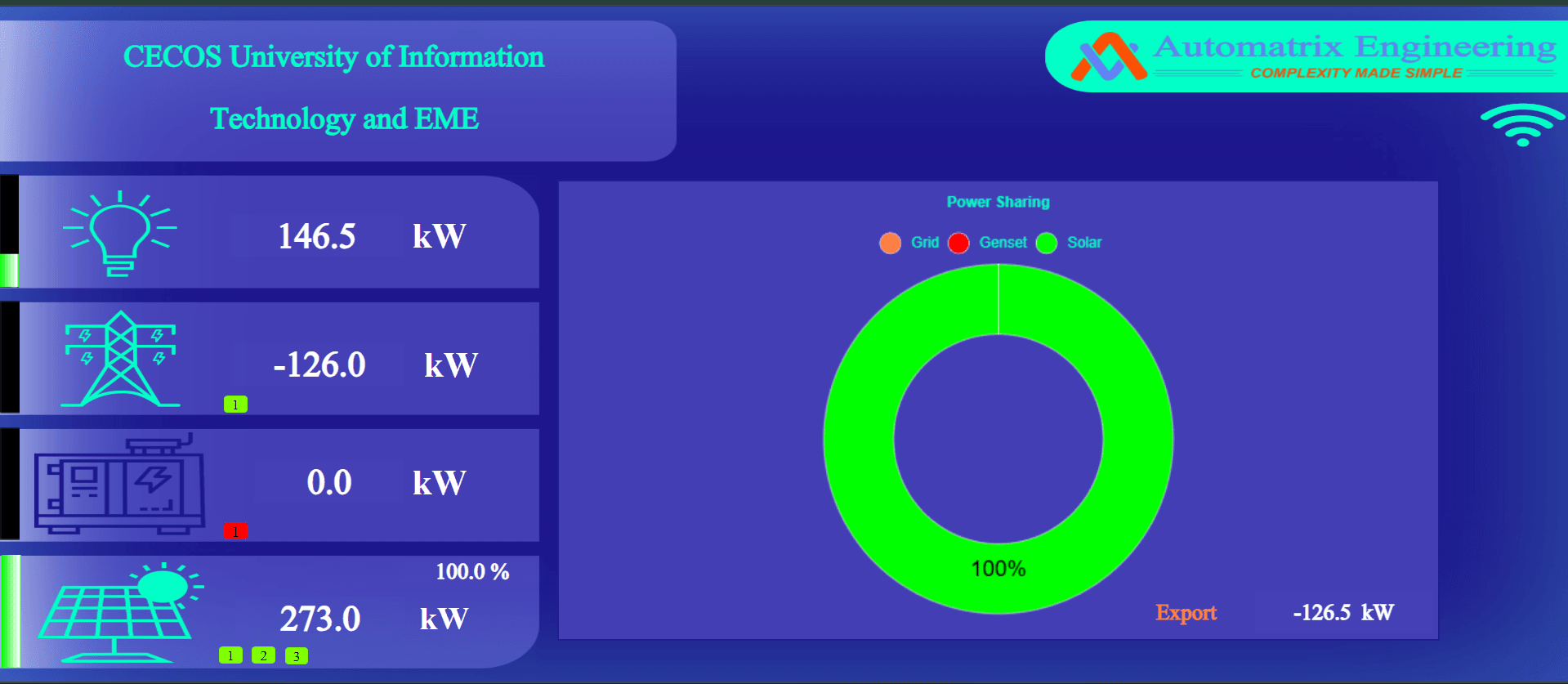
Electrical SLD snapshots, HMI/SCADA views, panel documentation, and commissioning records.

PV Generator Synchronization System for CECOS University Campus visual 1

Related Projects

Project FAQ

What was the primary challenge in PV Generator Synchronization System for CECOS University Campus?

The university campus relied on three solar inverters, a diesel generator and the grid operating independently, causing inefficient fuel use, risk of reverse power damaging the generator, and no centralized visibility across the three sources.

How was the solution implemented?

Installed zero-export protection to stop solar power being fed back to the utility, added reverse power protection for the generator, and configured the controller to prioritize solar consumption over diesel and grid.

What outcomes were delivered?

Improved operational visibility, Reduced manual intervention, Improved power reliability

Discuss a Similar Project

Share your load profile, control objectives, and site constraints. We will propose architecture options, implementation scope, FAT/SAT plan, and support model.