Client Challenge
The facility needed to combine a 400 kW solar installation with WAPDA grid power and a generator, but without synchronization, load sharing between sources would be inconsistent and power quality unstable.
Synchronization of a 400 kW solar power system with the national grid and a backup generator to deliver a stable, cost-efficient hybrid power supply.
Industry
Textile
Location
Pakistan
Solution
PV-DG Synchronization
Primary Outcome
Reliability Improvement
The facility needed to combine a 400 kW solar installation with WAPDA grid power and a generator, but without synchronization, load sharing between sources would be inconsistent and power quality unstable.
Project scope details are available from the engineering team.
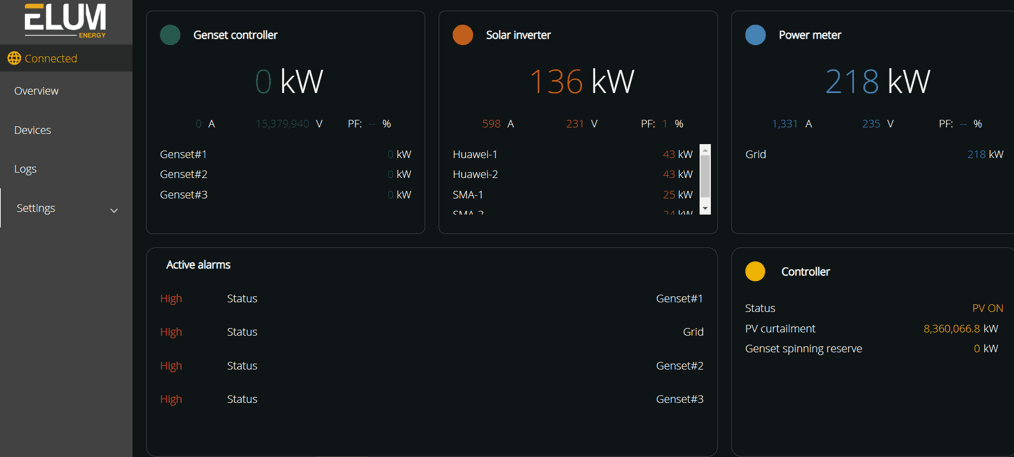
Automatrix's engineering team synchronized all three sources - solar, grid and generator - into a coordinated hybrid power system with automatic transfer switching and predefined load priorities.
The system was configured to prioritize solar generation to reduce dependency on grid and generator, with automatic switching between sources and centralized monitoring to oversee load distribution and efficiency.
The facility achieved stable voltage and frequency regardless of active power source, reduced fuel and grid dependency, and gained centralized oversight of its hybrid power system.
PV Generator Controller System for AA Cotton Industries
A PV Generator Controller system synchronizing 5 solar inverters, a diesel generator and grid supply to optimize power distribution at a cotton processing facility.
500kW Solar-Diesel-Grid Synchronization for Zimal Textile
PLC-based solar-DG-grid sync with Zero Export, up to 60% fuel savings.
Energy Monitoring System for Sareena Textile Mill Shaikhupura
Real-time energy monitoring system for Sareena Textile Mill Shaikhupura, providing load flow visibility and breaker status monitoring across three separate powerhouses.
The facility needed to combine a 400 kW solar installation with WAPDA grid power and a generator, but without synchronization, load sharing between sources would be inconsistent and power quality unstable.
The system was configured to prioritize solar generation to reduce dependency on grid and generator, with automatic switching between sources and centralized monitoring to oversee load distribution and efficiency.
More stable source coordination, Improved power reliability
Share your load profile, control objectives, and site constraints. We will propose architecture options, implementation scope, FAT/SAT plan, and support model.